


Wales’ bookshops play a vital role in local communities and national culture

21/01/2026
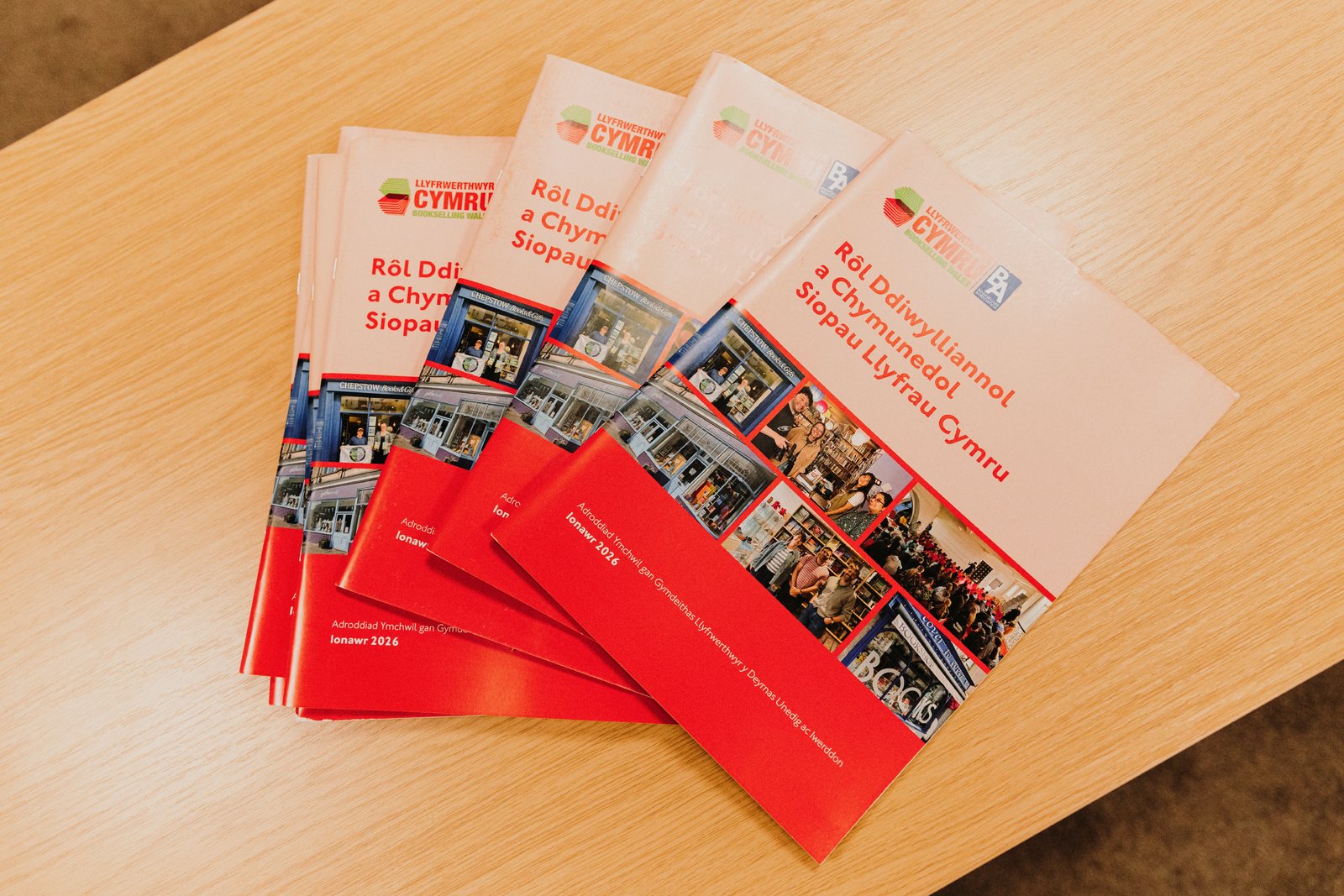
A new report by the Booksellers Association of the UK and Ireland entitled ‘The Cultural and Community Role of Wales’s Bookshops’ was launched today, 21 January 2026, at the Senedd in Cardiff, shining a spotlight on the vital and growing role Wales’s bookshops play as engines of community building, cultural enrichment, and boosting the Welsh language - while warning that this contribution remains fragile without targeted support.
Wales is currently home to 116 bookshops, including 64 independent bookshops, representing significant growth since 2017. However, the report finds that this progress remains precarious, with closures continuing to occur due to rising operating costs, structural pressures on in-person retail and high streets, and limited access to cultural funding. Against this backdrop, Wales’s bookshops are delivering an extraordinary range of community, cultural and educational activity, often at their own expense.
Drawing on unprecedented survey data representing nearly half of Wales’s independent bookshops alongside in-depth interviews with bookshops across the country (including Waterstones), the report illustrates how bookshops in Wales contribute far beyond the retail sector alone. Fostering children’s literacy and reading for pleasure, supporting libraries and local charities, acting as key cornerstones of the Welsh language, championing Welsh writers and publishers, and acting as trusted cultural and community hubs in towns, cities and rural areas across Wales.
The report also identifies barriers that risk undermining this work and future growth, including limited access to funding, high operating costs, time pressures on small businesses, and ongoing challenges facing in-person retail on the high street. It sets out clear, practical recommendations to ensure bookshops across Wales can continue to deliver cultural and community value.
A key recommendation is the establishment of a Culture Voucher Scheme for 16–21-year-olds in Wales. Building on successful European models and the Welsh Government’s own Schools Love Reading initiative, the scheme would improve access to cultural experiences, reduce inequality, and deliver direct economic support to Wales’s bookshops and cultural venues.
Sponsored by Hannah Blythyn MS, a loyal customer of The Bookshop Mold, the launch took place at the Senedd and brought together booksellers from across Wales and Members of the Senedd to discuss and champion the report’s findings and recommendations, the value bookshops bring to Welsh society, and what can be done to support and sustain this remarkable contribution.
The event featured a presentation by report author Howard Davies, alongside a keynote from Bookselling Wales Chair Jo Knell of Cant a Mil bookshop. Other speakers included Caryl Lewis, the award-winning novelist and the only writer to have won Wales Book of the Year in both Welsh and English, as well as Gwyneth Lewis, the inaugural National Poet of Wales, a Fellow of the Learned Society of Wales, whose words grace the Wales Millennium Centre.
Key Report Findings
The Value of Wales’s Bookshops
Wales’s bookshops are community anchors and cultural hubs across the country.
• 100% run activities or events for their local community
• 93% host author events, including readings, talks and signings
• 88% stock children’s Welsh-language titles
• 88% support Welsh-medium schools and teachers
• 83% stock Welsh-language books for adults learning Welsh
• 71% support local charities
• 64% collaborate with arts, music and literary festivals, including Eisteddfodau
• 64% host events with local schools in-store
• 64% organise school book fairs
• 61% work with libraries
• 57% run adult book clubs or reading groups
• 57% organise author events at local schools
• 39% run writing or creative workshops
• 36% run storytelling or storytime sessions for children
Barriers to Delivering Cultural and Community Value
Despite their impact bookshops in Wales face significant challenges in sustaining and expanding their cultural work on a local and national level.
- 72% would like access to grants to support community engagement
- 69% offer free-to-attend events, often absorbing costs themselves
- 68% cite concerns about the time required to apply for grants or public funding
- 63% would like greater support from publishers to help deliver events and activities
- Only 20% have successfully applied for public funding and feel confident navigating the process
Report Recommendations
The report calls for action from the Welsh Government, Welsh language bodies, cultural funders and publishers to strengthen the role of bookshops as cultural infrastructure in Wales. Key recommendations include:
- Introduce a culture voucher for young people in Wales, modelled at £250 and targeted at 16–21-year-olds
- Further Reform business rates in Wales, including targeted support for high-street bookshops and a proposed three-year rates exemption for new bookshops
- Improve recognition of bookshops as cultural spaces and delivery partners
- Establish an annual review meeting between the Welsh Language Commissioner, and senior representatives of Bookselling Wales and the BA, to maximise support for bookshops’ contribution to securing a thriving future for the Welsh language
- Improve support and information flows to help bookshops confidently stock and promote Welsh-language titles
- Expand dedicated funding for bookshop-led events and activities, with low administrative burden
- Strengthen partnerships between bookshops and libraries to boost literacy and reading for pleasure

Meryl Halls, Managing Director, Booksellers Association said: ‘Across Wales, bookshops are doing far more than selling books -they are creating spaces where culture is shared, language is sustained, and communities connect. This research shows the scale of that contribution, from supporting children’s reading to championing Welsh writers and publishers. Bookshops are essential civic assets, and their impact warrants greater visibility, protection, and long-term support.’
Jo Knell, Chair, Llyfrwerthwyr Cymru / Bookselling Wales said: ‘This research reflects the lived reality of booksellers across Wales. Bookshops support reading and creativity while helping sustain cultural life in both the Welsh language and English language . The research particularly underlines the importance to the Welsh language of Welsh-language and bilingual bookshops in supporting children, learners, and fluent speakers day in day out. Wales’s bookshops are cultural and social assets for the nation. Their distinctive role deserves to be better known, celebrated, and supported.’
Laura McCormack, Head of Policy and Public Affairs, Booksellers Association said: ‘This report makes clear that bookshops sit at the intersection of national culture, literacy, and identity. Welsh bookshops contribute significantly to creative life in Welsh, English, and bilingual communities, yet their wider role is often overlooked. With targeted policy measures - such as youth culture vouchers, fairer business rates, and easier access to cultural funding - there is an opportunity to maximise bookshops potential to reinforce Wales’s cultural infrastructure.’
Howard Davies, Report Author said: ‘Working with bookshops across Wales has highlighted just how much cultural value they generate on a daily basis. I was powerfully struck by the close relationships enjoyed by Wales’s bookshops with schools, libraries, authors, and festivals, meaning they play a fundamental role in maintaining Wales’s literary ecosystem. The report provides clear evidence of their importance and why continued recognition and support are not just essential for Wales’s booksellers but imperative to a flourishing Wales.’
